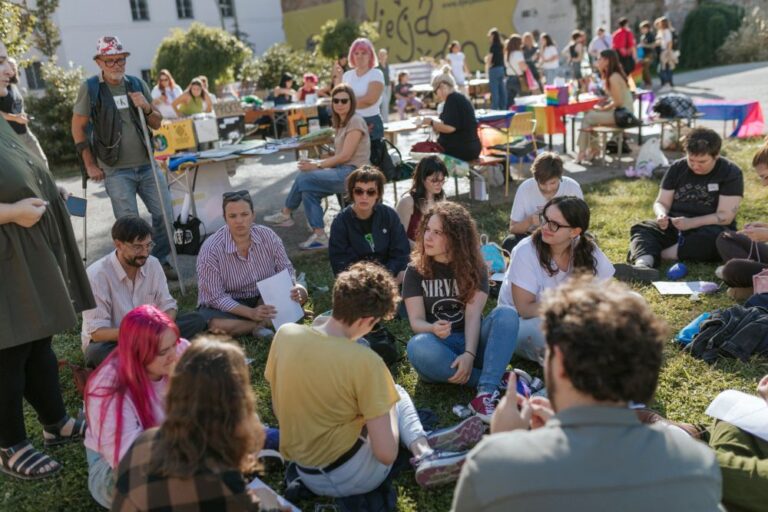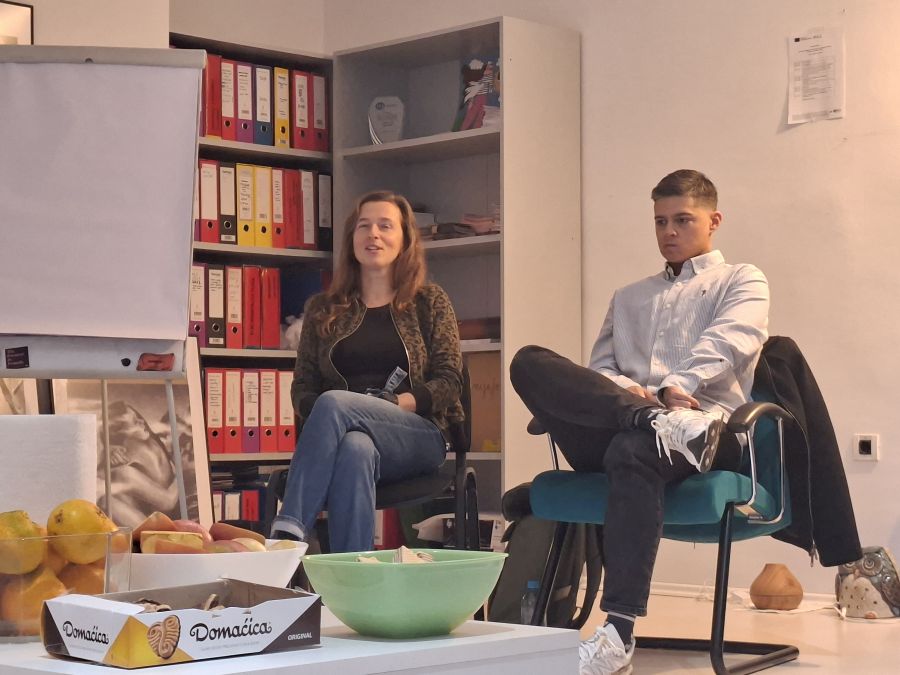
On 7 November 2026, a training session titled “Affirmative Counselling Work with LBTIQ Women and Non-Binary People: Understanding, Reflection and Practice”, organised by the associations LORI and SOS Rijeka, was held at the premises of SOS Rijeka. It brought together 15 professionals from the fields of psychosocial and counselling work, as well as psychology students, with a shared goal: to enhance their knowledge, skills, and reflective competencies so that support for LBTIQ women and non-binary people is even more accessible, safer, and of higher quality.
The training was facilitated by psychologists Marina Štambuk and Mateo Popov, who shared their extensive experience in counselling LGBTIQ+ individuals through a clear professional framework, as well as an open and stimulating exchange with the group.
The programme was divided into two parts, interweaving theory, personal reflection, and concrete examples from practice:
The introductory part focused on exploring participants’ own experiences, knowledge, and attitudes regarding sexual and gender identity through experiential exercises and pair work. Particular attention was paid to understanding the social field of heteronormativity and the role of shame in shaping attitudes towards LGBTIQ people. Through collaborative work, participants explored the link between maladaptive shame and internalised homo/bi/transphobia, and became familiar with different approaches to working with shame within the counselling process.

In the second part, the emphasis was on the dynamics of LBTIQ+ intimate relationships and how they are affected by minority stress, coming out, ways of meeting partners, and societal expectations. The experiences of trans people and their partners, bisexuality, and the specific characteristics of lesbian relationships were covered in detail, alongside theoretical concepts such as emotional fusion, autonomy, intimacy, gender socialisation, and internalised homophobia. Through the analysis of real-life case studies and practical guidelines on dos and don’ts when working with LBTIQ women and non-binary people, participants gained a range of useful, immediately applicable tools for their day-to-day work.
The training took place in a stimulating and supportive atmosphere, providing participants with a valuable space to exchange experiences and further empower themselves for affirmative practice in which every service user can feel safe and accepted. The training was held as part of the project “REACH OUT 2.0 – Developing Adequate Support for LBTIQ Women and Non-Binary Survivors of Gender-Based Violence”.